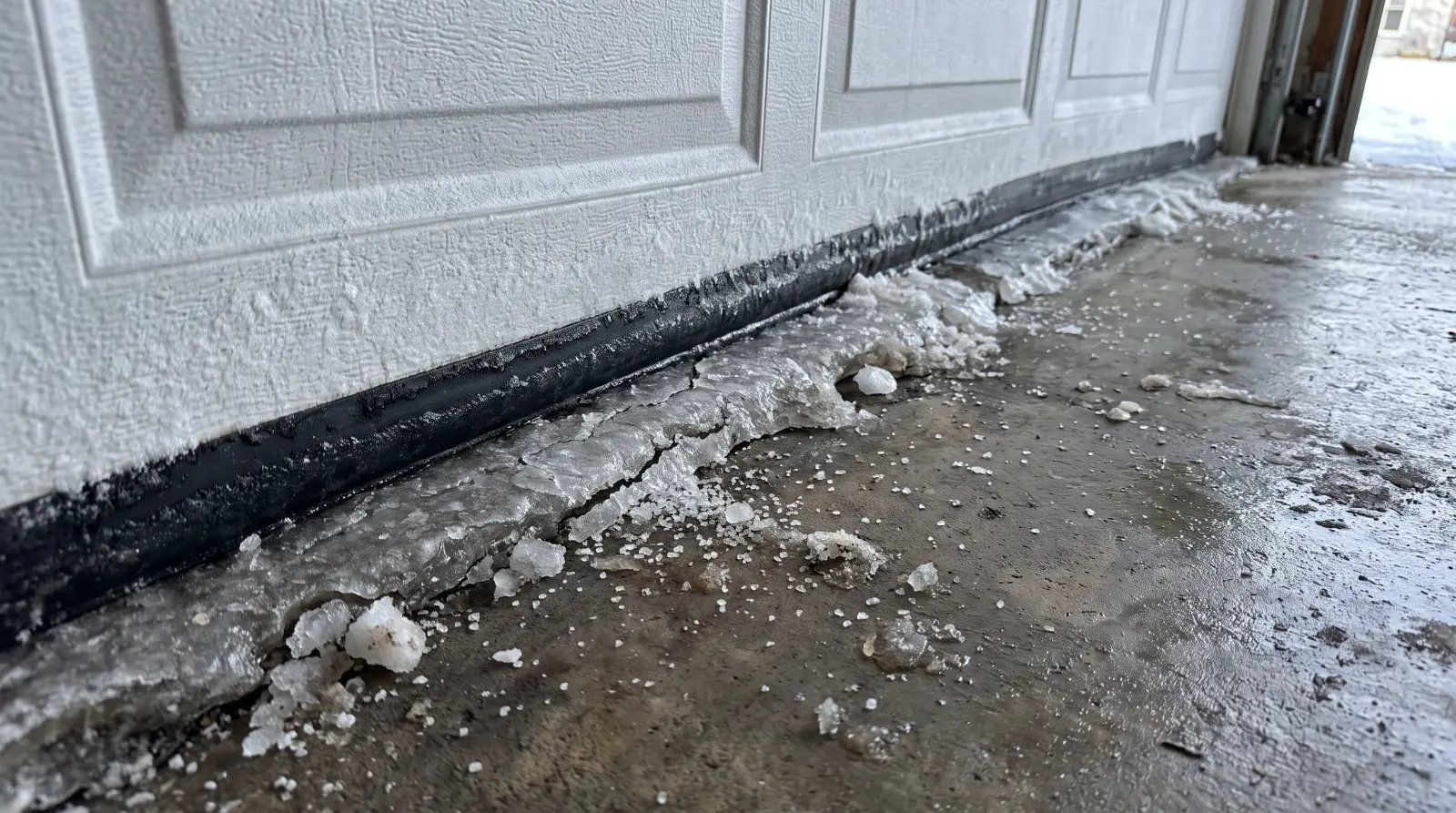
Garage doors tend to fail in two seasons: the first hard freeze of late fall, and right after big storms. Cold stiffens grease, makes springs less forgiving, and freezes the bottom seal to the floor. Nor'easters add drifting snow, slush and long power outages. A little preparation in October or November avoids most of it.
Fall checklist
- Lubricate hinges, roller bearings and springs with a garage door lubricant or silicone spray. Wipe off the excess.
- Check the bottom seal. If it's cracked, torn or flattened, it'll let in water that freezes. Replace it before the snow.
- Test the balance. With the door closed, pull the release cord, lift the door halfway and let go. It should stay roughly in place. If it drops or shoots up, the springs need adjusting by a technician.
- Look at the springs and cables. Gaps in the spring coils or frayed cable strands mean call now, not after the first freeze.
- Test the auto-reverse. Place a block of wood flat on the floor in the door's path. The door should reverse when it touches it.
- Clean the sensors and make sure nothing will be stored in front of them all winter.
- Check the opener battery backup if you have one. Many backup batteries only last a few years.
- Know your release cord. Make sure everyone in the house knows how to open the door by hand during a power outage, and that it should only be pulled with the door closed.
Frozen bottom seal
This is the number one winter call. Meltwater from cars or snow runs under the door and freezes overnight. In the morning the opener strains and either stops or lifts one side.
- Stop running the opener.
- Free the seal with a plastic scraper or putty knife, or warm it with a hair dryer on low. A bag of warm water laid along the seal works too.
- Clear slush and ice from the floor where the door lands. Sprinkle a little sand or ice melt there. Ice melt is corrosive, so sweep it up in spring.
- Once it's free, run the door and watch it. If one side lifts first or a cable looks slack, stop. See our cables and tracks page.
To prevent it, keep the floor in front of the door clear and dry, and if water keeps pooling there, ask about a threshold seal or a new bottom seal.
Door frozen down or stuck after a storm? Call and describe what it's doing.
Call (401) 498-DOORSprings in the cold
Springs near the end of their life very often break on the first cold mornings of the season. If yours are the original springs on a door that's more than six or seven years old and used daily, they're likely near the end of their rated cycles. Our broken spring guide explains the signs.
Sluggish openers
Cold makes grease in the opener rail and on the door hardware thick. The opener feels more resistance and may stop partway. Lubricating the door helps. Some openers also let you adjust force settings, but don't turn the force up to compensate for a door that's binding. Find out why it's binding. More on our opener page.
During and after a nor'easter
- Clear drifted snow away from the door before opening it. Snow banked against the door adds weight and can bend the bottom section.
- Don't let a plow pile or a snowblower discharge hit the door.
- In a power outage, use the release cord only with the door closed, and lift by hand only if the door feels light and balanced.
- After the storm, rinse salt off the bottom of the door and the brackets once temperatures allow.
Spring cleanup
When the snow is gone, hose the salt off the bottom section, the brackets and the floor, let everything dry, and lubricate again. Road salt left on the hardware all summer keeps working on it. The salt air and rust page explains why this matters so much in Cranston.
Common questions
Why does my garage door stop halfway when it's cold?
Cold stiffens grease and can freeze the bottom seal, so the opener senses extra resistance and stops. Free any ice, lubricate the door hardware, and see whether it improves. If the door still binds, have it checked.
Can I pour hot water on a frozen garage door seal?
It works briefly, but the water refreezes and makes the problem worse. A hair dryer or a plastic scraper is better, followed by clearing and drying the floor.
Should I use ice melt in front of my garage door?
A little sand or ice melt helps, but salt-based products are corrosive to the door's hardware. Use it sparingly and rinse it off in spring.