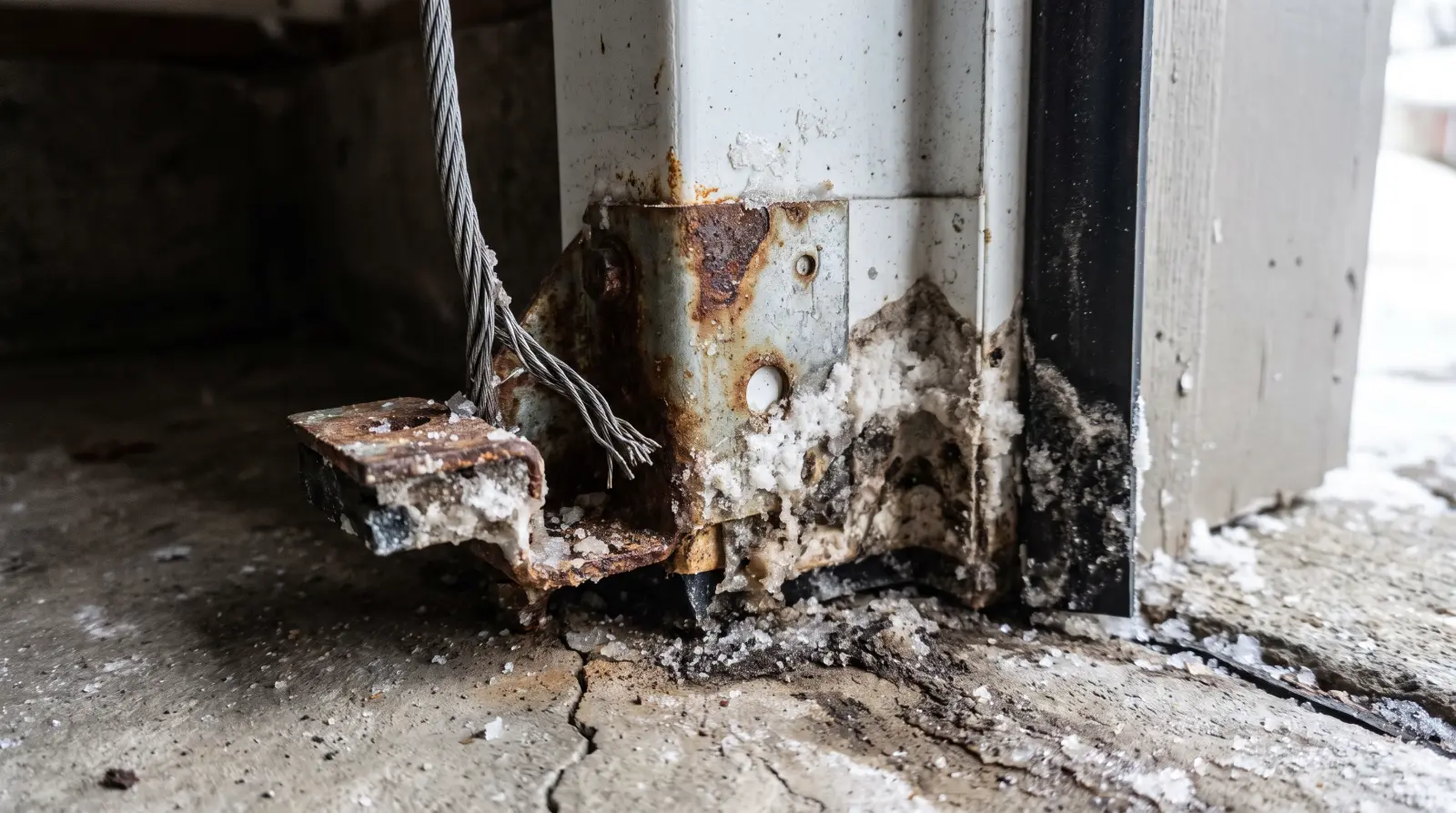
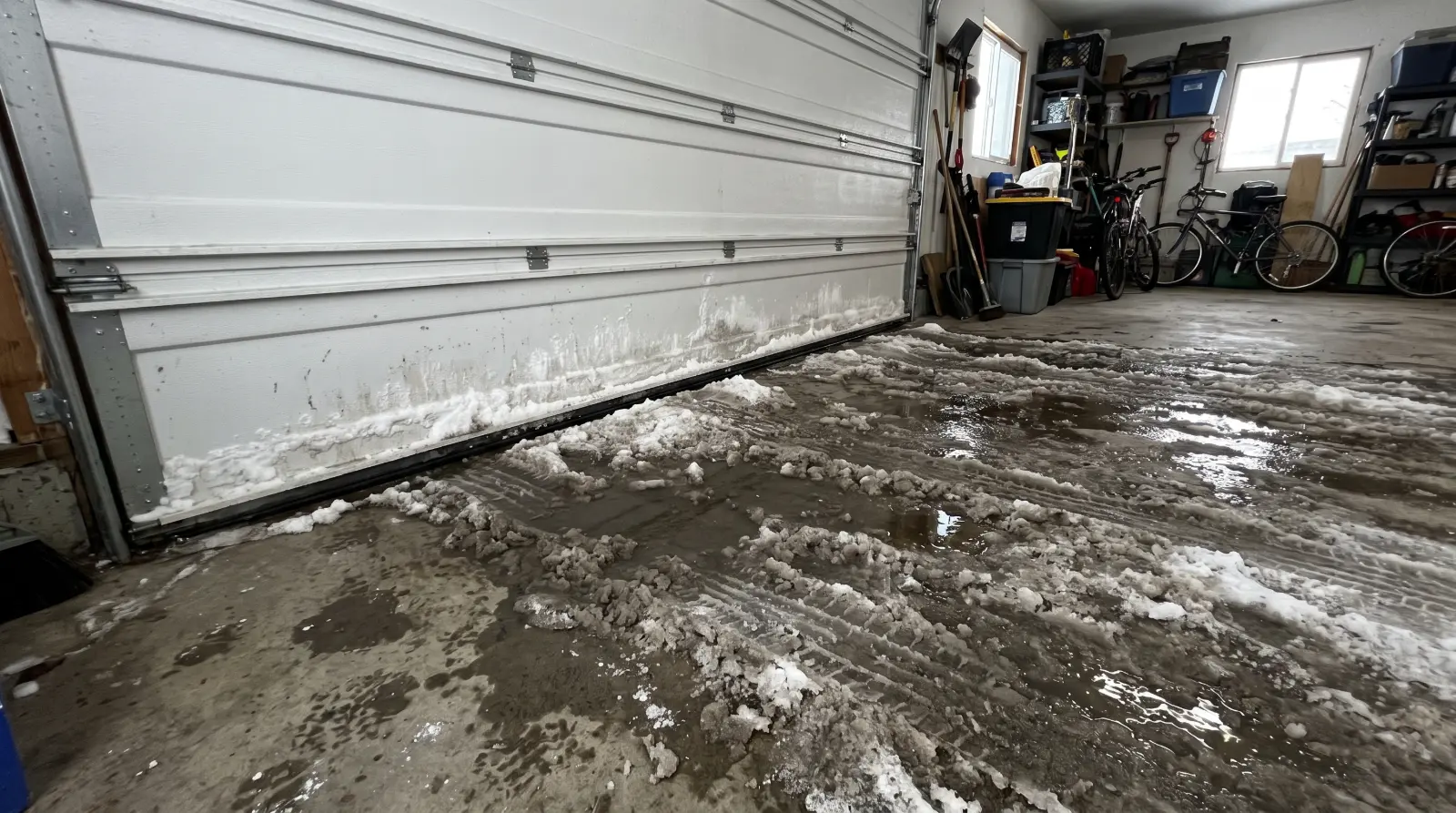
Garage doors don't rust evenly. The top of the door stays fairly dry. The bottom foot or so, where meltwater pools, road salt drips off cars and the bottom seal holds moisture against the steel, takes most of the damage. Unfortunately that's also where some of the most important hardware is.
Why doors near the bay rust faster
Salt in the air speeds up corrosion. You don't need to live on the waterfront to get it. Neighborhoods like Pawtuxet Village and Edgewood sit right on the bay and the mouth of the Pawtuxet River, and humid onshore air reaches well inland on summer days. Add Rhode Island's winters, when the roads are salted for months and every car tracks brine into the garage, and steel parts near the floor spend much of the year damp and salty.
Detached garages often have it worse. Many of the older ones in Edgewood and Knightsville sit on a slab that's lower than the driveway, so water runs in under the door. Some have no gutters, so rain drips straight onto the bottom of the door.
Which rusted parts matter
| Part | Why rust matters | What to do |
|---|---|---|
| Bottom brackets | Hold the end of the lift cable under full spring tension. Rust can split them. | Have a technician look if they're flaking, swollen or cracked. Don't loosen them yourself. |
| Lift cables | Rusty, frayed strands near the bottom mean the cable is weakening. | Stop using the door if strands are broken. Cables are replaced in pairs. |
| Springs | Rust adds friction between coils and shortens spring life. | A technician can tell you if they're near the end. Light lubrication helps. |
| Rollers and hinges | Rusted bearings grind, bind and make the opener work harder. | Lubricate them yourself. Replacement rollers can be nylon with sealed bearings. |
| Bottom of the door panel | Rust-through on the lowest section lets water in and weakens the panel. | Sometimes one section can be replaced. Sometimes it's time for a new door. |
| Track | Surface rust is cosmetic. Deep rust at the floor can weaken the mounting. | Keep the bottom of the track clean and dry. |
The bottom bracket is the one to watch
If you only check one thing, check the bottom brackets, at the two lower corners of the door where the cables attach. A bracket that's flaking, swollen with rust, or cracked can let go without warning. When it does, the cable on that side releases, the door drops on that side, and it can come out of the tracks. Our cables and tracks page explains what happens after that.
Don't try to remove or loosen a bottom bracket. It's under the full pull of the springs through the cable. Replacing one is a technician's job.
Seeing rust where the cable meets the door? Have someone look before it lets go.
Call (401) 498-DOORWhat you can safely do
- Rinse and dry. After the last snow of the season, hose the salt off the bottom of the door and the floor in front of it, then let it dry with the door open.
- Lubricate twice a year. Use a garage door lubricant or a silicone or lithium spray on hinges, roller bearings and the springs. Wipe off the excess. Avoid heavy grease, which collects grit.
- Keep the floor dry. A squeegee after storms helps, and a floor mat or containment mat under the car catches brine.
- Check the bottom seal. A torn or flattened seal lets water and slush in. Replacing a bottom seal is usually simple, but on some doors it means removing the bottom bracket, so check first.
- Look up at the springs. Rust on the coils is a sign they're working hard. Mention it to the technician next time.
What to ask a technician about rust
- Are the bottom brackets and cables still sound, or should they be replaced?
- Are there galvanized or coated parts that hold up better near the water?
- Would nylon rollers with sealed bearings help?
- Is the bottom section of the door repairable, or is the door near the end of its life?
- How often should the door be serviced given where we live?
More questions, plus how to check a contractor's Rhode Island registration, are on our questions to ask a garage door company page.
When rust means it's time for a new door
Surface rust on hardware is normal and fixable. Rust that has eaten through the bottom panel, sections that are rusting along their seams, or a door that needs new brackets, cables, rollers and a seal all at once can mean the door is near the end. A newer door with better-coated steel or a composite bottom section can hold up better in coastal air. Our repair or replace guide goes through how to decide.
Common questions
Is a rusty garage door dangerous?
Surface rust on the door skin is mostly cosmetic. Rust on the bottom brackets, cables or springs is a different matter, because those parts hold the door's weight under tension. Have them checked if they're flaking, swollen or frayed.
Can I use WD-40 on my garage door?
Regular WD-40 is a cleaner more than a lubricant. A garage door lubricant, or a silicone or white lithium spray, lasts longer on hinges, rollers and springs. Wipe off any excess.
Do I live close enough to the water for this to matter?
The closer you are to the bay and the Pawtuxet River, the more it matters, but road salt affects every garage in Rhode Island. If the bottom of your door and the brackets are rusting, it matters for you.