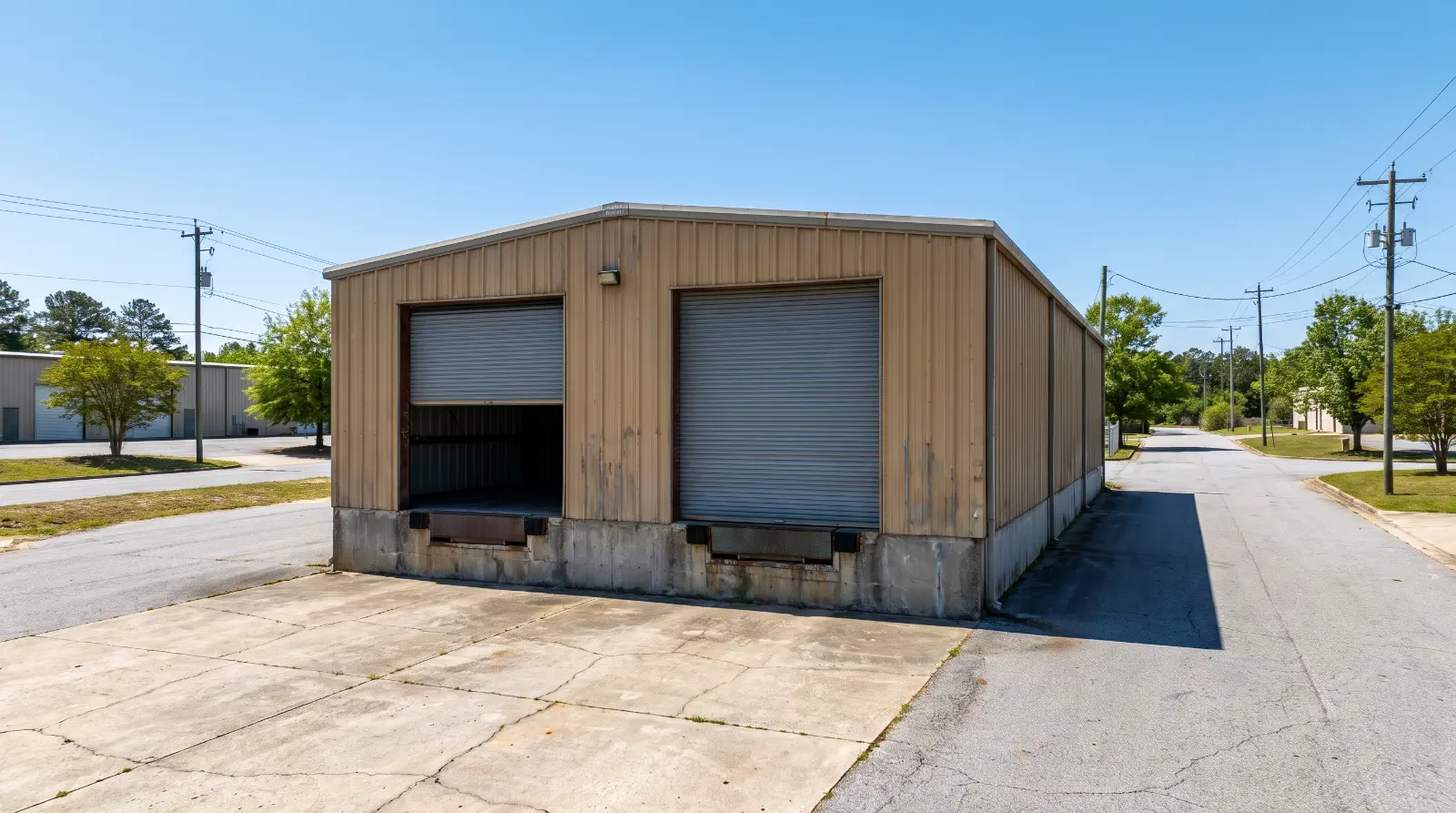
Commercial doors work much harder than residential ones. A service bay door can cycle dozens of times a day, and a loading dock door takes knocks from forklifts and trailers. When one fails, it can stop deliveries, lock vehicles in, or leave a building unsecured overnight.
The line covers businesses in Cranston and nearby towns, including the commercial strips along Reservoir Avenue, Park Avenue and Route 2, and the industrial areas in Cranston, Warwick and Johnston. When you call, say that it's a commercial door so the call can go to a company that handles them.
Types of commercial doors
- Rolling steel doors. Slats that coil into a drum above the opening. Common on warehouses, storage units and storefront security.
- Commercial sectional doors. Like a heavy-duty home garage door, often insulated, with windows. Common on service bays and fire stations.
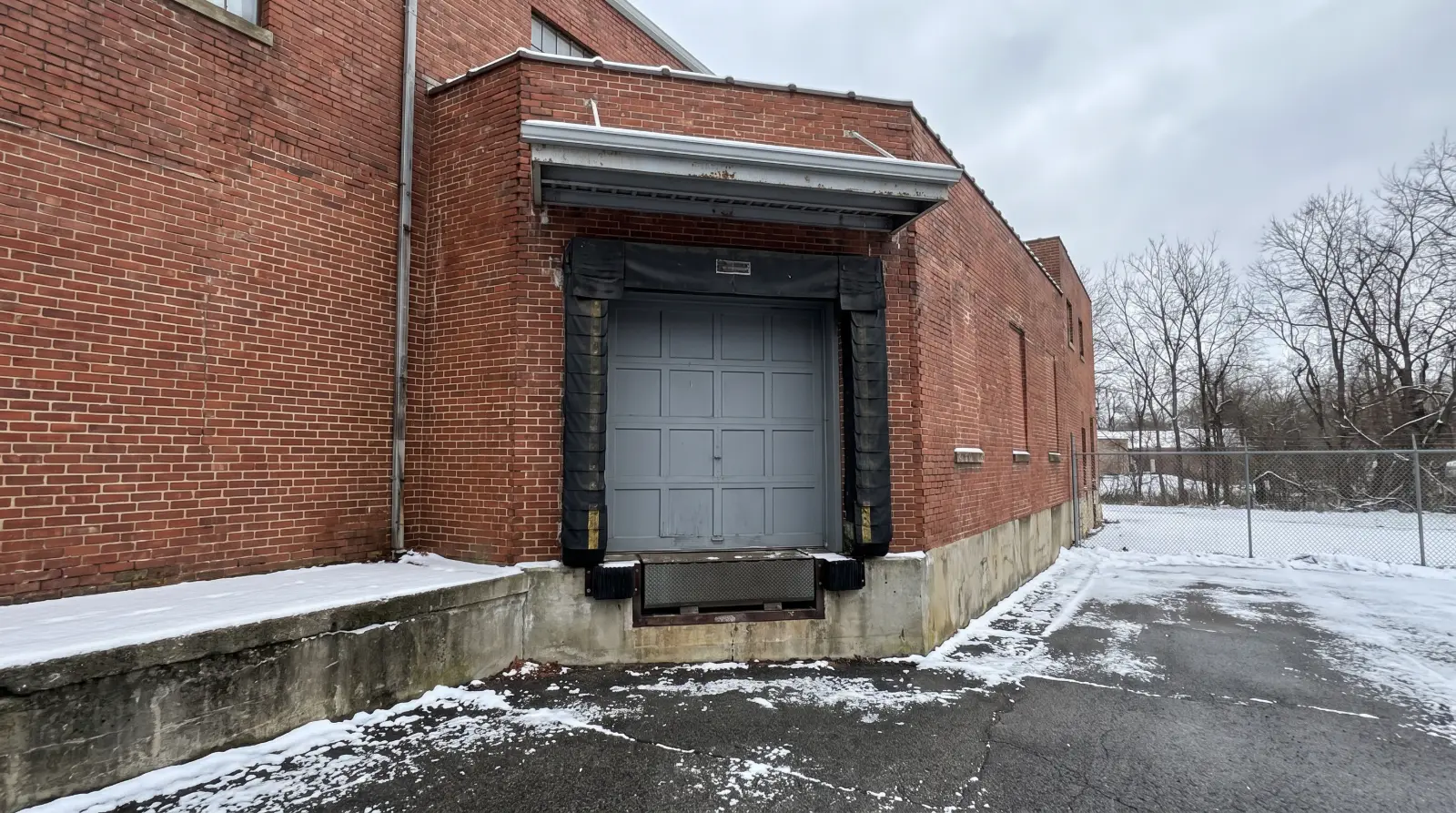
- Loading dock doors with dock seals or shelters, often paired with levelers.
- High-speed fabric doors in some food and distribution buildings.
- Fire doors that close automatically in an alarm. These need periodic drop testing by a qualified technician.
Common problems
Broken springs
Commercial doors use larger springs that run through cycles faster. Signs are the same as at home: a bang, a door that won't lift, or an operator that strains.
Impact damage
Forklifts, box trucks and trailers bend sections, slats and tracks. Running a damaged door can make it worse. A bent rolling door slat can jam the coil.
Operator failures
Commercial operators have their own failures: limit switches, brakes, control boards and photo-eyes or edge sensors. Note any error codes or blinking lights.
Rust and salt
Delivery trucks track brine all winter. Bottom bars, guides and the lower slats of rolling doors corrode fastest. Our rust guide covers the same issues on a smaller scale.
Weather seals and dock seals
Torn seals let in wind, rain and heat loss. They're wear items and can usually be replaced without replacing the door.
Commercial door down? Call and say it's for a business.
Call (401) 498-DOORBefore you call
- Type of door: rolling steel, sectional, dock, high-speed or fire door
- Approximate size of the opening
- What happened: impact, bang, won't open, won't close, stuck partway
- Operator brand and any error codes
- Whether the building can be secured if the door stays open
- The best time for access and who will be on site
Safety
- Don't run a door that's off its guides, jammed, or visibly damaged.
- Keep people and vehicles out from under a door that's stuck partway open.
- Don't try to adjust commercial springs or a rolling door's tension. They hold far more energy than residential springs.
- Don't disable photo-eyes or safety edges to get a door to close.
Preventive maintenance
Busy commercial doors benefit from scheduled service, often twice a year: lubrication, spring and cable checks, balance and limit adjustments, and safety device tests. Ask the company you speak with whether they offer a maintenance plan. For questions to ask before work starts, see questions to ask a garage door company.
Common questions
Does the line cover businesses?
Yes. Say it's a commercial door when the prompt asks what you need, and we'll try to connect you with an independent company that handles commercial doors in your area.
How often should a commercial door be serviced?
Many busy doors are serviced about twice a year, and high-cycle doors more often. Fire doors also need periodic testing. The company you speak with can suggest a schedule.